Complete RCS onboarding
Prerequisites
Before starting the RCS onboarding process, ensure that:
- Your Exotel account is fully active (not in trial mode).
- KYC verification is completed for your account.
Overview
To begin using RCS, you must first create an RCS bot/agent. This bot will serve as the messaging agent through which A2P (Application-to-Person) messages are sent to end users.
Note:
- Similar to how SMS uses Sender IDs and WhatsApp uses Business Names/Numbers, RCS messages will be sent via your RCS bot name.
- You can choose a bot name that represents your brand.
Steps to Onboard an RCS Bot
Step 1: Access the RCS Section
- Log in to your Exotel Dashboard.
- Click on the "RCS" tab in the left navigation menu.
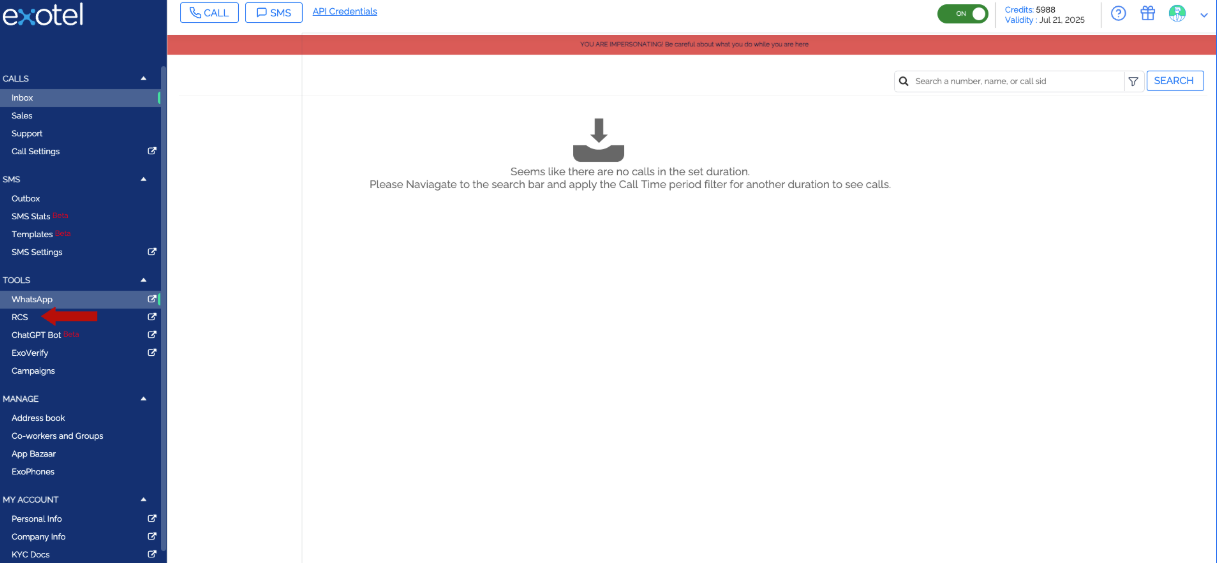
3. You will be redirected to Exotel’s Messaging Console.
4. In the left navigation menu, you will see two options:
- RCS
Step 2: Create an RCS Bot
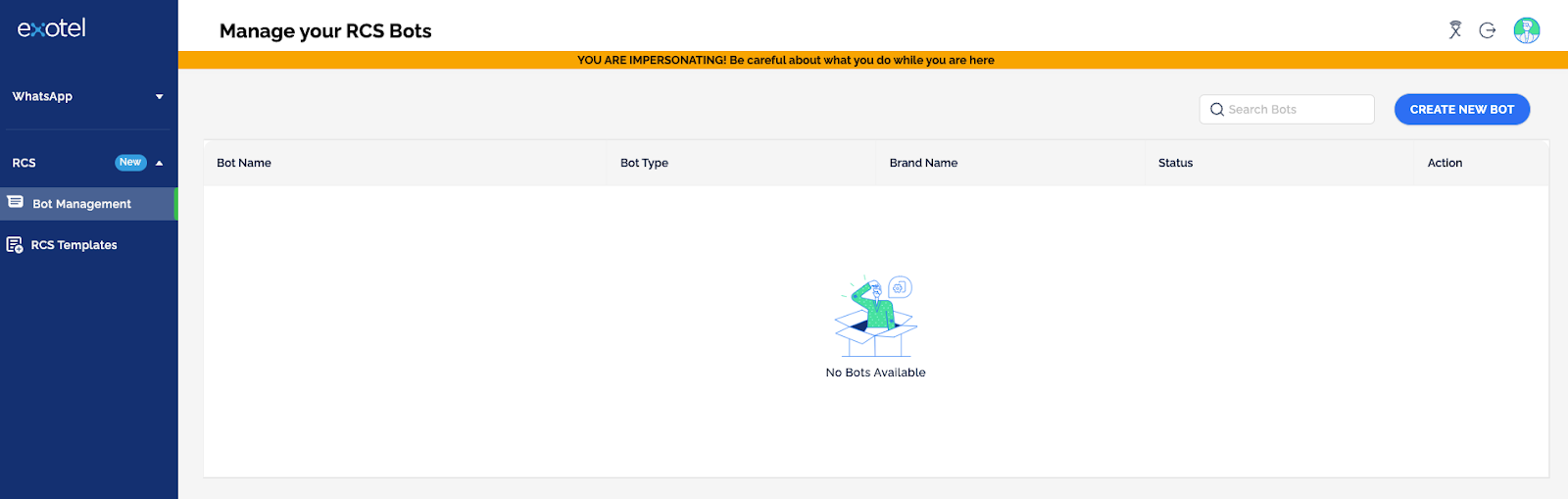
- Under the RCS section, select "Bot Management".
- If no bots have been created, the page will appear blank.
- Click on "Create New Bot" in the top-right corner.
- Complete the two-step bot creation process as follows:
Step 2.1: Configure Bot Type & Message Type
- Bot Type: Select either Domestic or International. Currently, only Domestic (India) is available.
- Message Type: Choose the type of messages the bot will send:
- Promotional: Sales, marketing, or promotional messages for customer engagement (similar to SMS promotional messages).
- Transactional: Notifications and informational messages for existing customers (similar to service messages in SMS).
- OTP: One-time password (OTP) messages or time-sensitive transactions.
Note: If you plan to send messages from multiple categories, you must create a separate RCS bot for each.
Step 2.2: Enter Bot Details
The details provided here define how your bot appears to end users. When a user receives an RCS message, they can click on your bot name to view business-related information.
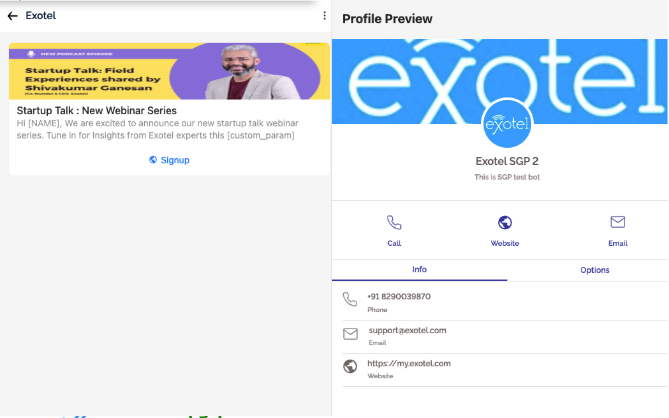
Fill in the following details:
- Bot Name:
- This is the name that will appear when sending RCS messages.
- It should reflect your business, service, or campaign identity.
- Example: If you are XYZ Bank, your bot name could be XYZ Alerts for transactional messages or XYZ Offers for promotions.
- Brand Name:
- Your official business name as recognized by customers.
- It helps users identify your brand when managing multiple bots.
- Example: If you are XYZ Technologies Pvt. Ltd., your brand name should be XYZ Technologies.
- Short Description:
- A brief tagline or summary of your bot’s purpose.
- It will be displayed beneath the bot’s name in user interactions.
- Maximum 100 characters.
- Example: "Get real-time updates and exclusive offers from XYZ Bank."
- Color:
- Choose a brand-appropriate color that aligns with your identity.
- The color must have a minimum contrast ratio of 4.5:1 for readability.
- Avoid light colors, as they may blend into a white background.
- You can preview the selected color before finalizing it.
- Bot Logo:
- This image will appear as your bot’s profile picture.
- Maximum size: 90 KB
- Supported formats: JPEG, JPG, PNG
- Preferred dimensions: 224 x 224 px
- Banner Image:
- This will be displayed at the top of the bot’s profile.
- Maximum size: 360 KB
- Supported formats: JPEG, JPG, PNG
- Preferred dimensions: 1440 x 448 px
- Primary Phone Number & Label:
- The phone number you want users to see in your business details.
- This could be a customer support number, sales hotline, or a general contact.
- Example: +91 98765 43210 (Support), +91 98765 67890 (Sales).
- You can add up to 3 phone numbers.
- Primary Email & Label:
- The email address you want to display for customer queries.
- Example: [email protected] (Support), [email protected] (Business Inquiries).
- You can add up to 3 email addresses.
- Primary Website & Label:
- A website link that users can visit for more details.
- Example: www.xyz.com (Official Website), www.xyz.com/offers (Latest Deals).
- You can add up to 3 website URLs.
- Terms of Use URL: Link to your terms of service.
- Privacy Policy URL: Link to your privacy policy.
- Languages: Select the languages in which you will send RCS messages.
Please find the reference to where the above details will be displayed in the Bot Preview:
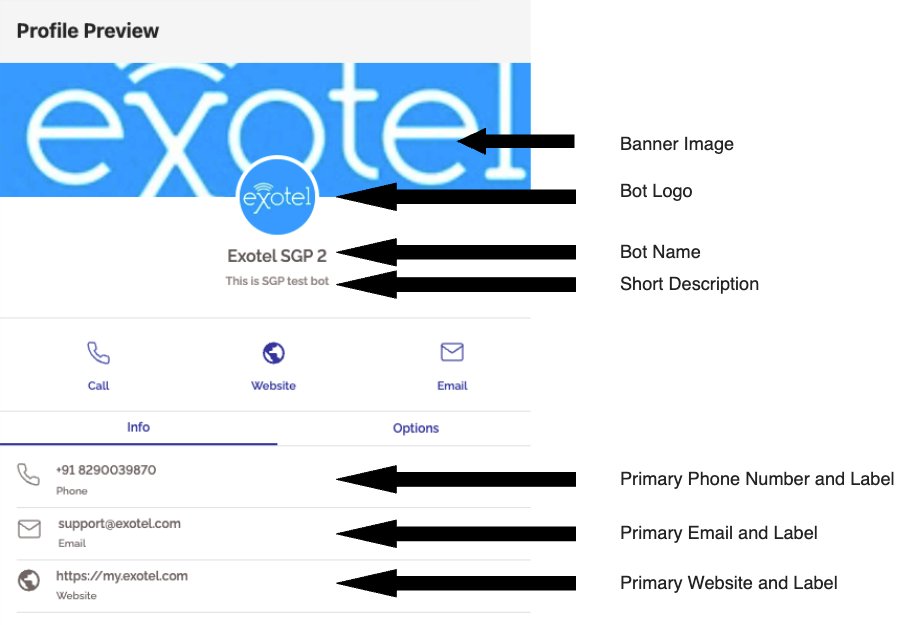
After filling in these details, click "Submit" to create your bot.
Bot Approval & Activation
Once submitted, your bot will enter the "Submitted" state. You can track its status on the RCS Bot Management page.
- Submitted → Created: Once approved by our partner vendor, the bot status will change from "Submitted" to "Created".
- Next Steps After Bot Creation:
- Add Test Devices – Test RCS functionalities via APIs.
- Create RCS Templates – Design and test RCS message templates.
- Complete RCS Verification – Submit a verification form to move from staging to production, enabling messaging to a broader audience.